Cards, MB Way and Payments in Portugal for Americans and Britons

Published Last verified
In this article
- What we read, and the day
- Which cards will a bank in Portugal give me?
- How do contactless payments work, and what are the limits?
- Do all shops accept my card?
- What is MB Way and how does it work?
- How do I sign up for MB Way, and can I use a foreign phone number?
- What does MB Way cost?
- Can I send money abroad with MB Way?
- How do bank transfers, direct debits and cash work?
- How are dollars and pounds converted into euros?
- What if my card or phone is lost, stolen or misused?
- How do I complain about a card or payment problem?
- Pages read for this guide
- FAQ
In Portugal you pay with a debit or credit card from your bank, with a payment app such as MB Way, with a direct debit for regular bills or with cash within legal limits. Banco de Portugal explains each of these, and the MB Way operator explains who can join, including with a foreign phone number.
This guide covers day-to-day payments once you have a bank. If you do not have an account yet, start with opening a bank account in Portugal, which is where the debit card comes from. Where the payments fit in your first months is in the first year settling-in guide and the first month paperwork guide. It reports what the pages say on the day we read them. It is not financial advice.
What we read, and the day
Related guides: keeping your US or UK accounts while living in Portugal.
We read the Banco de Portugal bank customer portal pages on cards, payment apps, transfers, direct debits and cash on 18 October 2026. The pages carry no date of their own; their footer reads 2026. We also read the MB Way website of SIBS on the same day. SIBS runs the MB Way service, so its pages are the operator’s own description of its product and not a public authority’s: we label them as operator pages. We found no dated legal change tied to these pages, so this guide has no “last changed” date to give. The portal pages refer to EU Regulation 2024/886 on instant transfers and to a Portuguese payment services law, which we did not open. The pages do not discuss U.S. or U.K. cards used in Portugal, and we do not either.
Which cards will a bank in Portugal give me?
Banco de Portugal says payment cards are issued by authorized payment service providers (credit institutions, payment institutions or electronic money institutions) through a contract. It describes five categories:
| Card | What Banco de Portugal says |
|---|---|
| Debit | Linked to a payment account; each payment is immediately subtracted from the balance |
| Credit | Has a previously contracted maximum credit limit; you can pay the full outstanding amount by the deadline and owe no interest, or pay part and owe interest on the rest |
| Deferred debit | A subtype of credit card linked to your account; amounts are debited later, on a date agreed with the issuer, with no interest payable, and it has a credit limit |
| Prepaid | Has an amount you delivered to the issuer beforehand; payments are deducted from it |
| Dual or multi-function | Combines debit and credit functions |
On who gets one, the page is clear: providers are not obliged to grant cards to their customers and are free to set their own criteria. The exception is a basic bank account, where the bank must provide a debit card to operate that account. The costs of the card (yearly fee, interest and other fees) must be written in the contract and in the issuer’s price list. For what a basic account includes, see our bank account guide.
Cards that carry the Multibanco brand also work at ATMs of that network for service payments, payments to the State and “ATM transfers”, per the same page.
How do contactless payments work, and what are the limits?
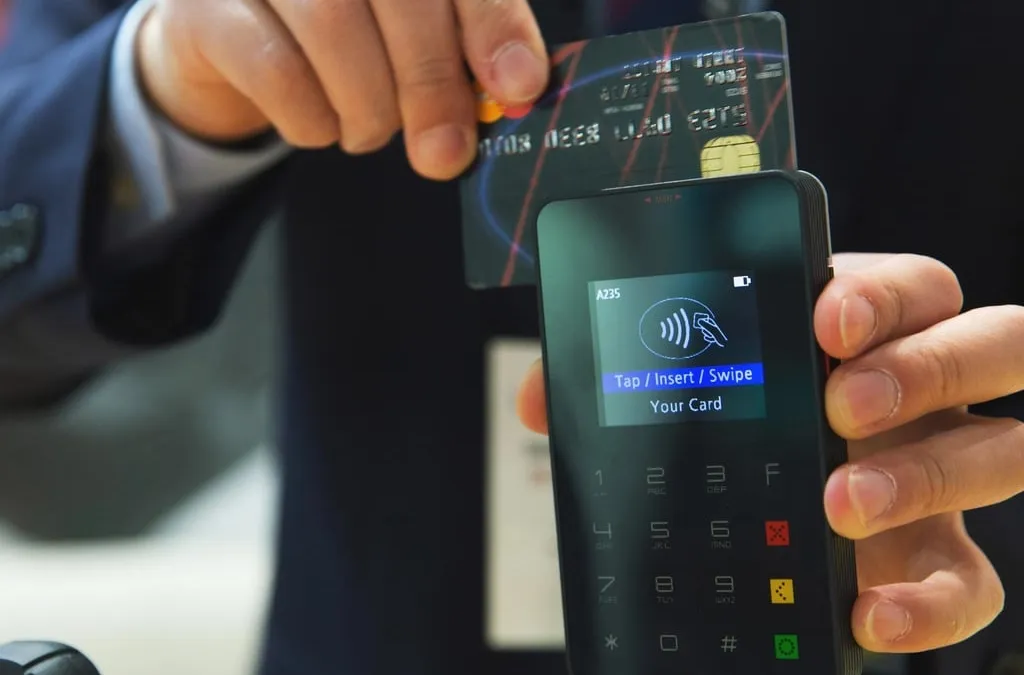
Banco de Portugal says contactless cards need no PIN: you hold the card near the terminal. The card is activated after the first use at an ATM or the first payment at a terminal with the PIN. The issuer sets the limits and must tell you what they are. “As a rule”, you can pay without the PIN if the transaction is 50 euros or less and the running total or number of successive contactless payments is no more than 150 euros or 5 transactions; the issuer may set lower limits. After the limits are reached, you need a transaction where you enter the PIN. The portal adds that you may be asked for the PIN at random as a security measure, and that contactless can also be made on a mobile device such as a smartphone.
Do all shops accept my card?
No. Banco de Portugal says merchants are not obliged to accept payment cards. If they do, they decide which brands and types to accept, and they must tell customers which ones, at the entrance and at the cashier, or on the website for distance sales. The page also says that a card with two brands (a co-badged card, for example Multibanco and Visa) lets you choose the brand at a terminal that accepts several, and that some Portuguese credit cards allow debit operations at ATMs but cannot be used at terminals to debit the current account.
What is MB Way and how does it work?
Banco de Portugal describes payment apps as software on a phone, tablet or smartwatch that lets you send or receive funds between users, pay online, pay in person, generate virtual cards or generate codes to withdraw cash at ATMs. It lists MB Way, Apple Pay, Google Pay, Garmin Pay, Fitbit Pay and Swatch Pay as apps run by third-party providers. You link a current account or card through which the money moves, and the central bank says the final responsibility for correct execution stays with your own payment service provider.
On its own site, SIBS lists what MB Way does: pay in shops by QR code or NFC, pay online with your phone number, send, request and split money between contacts, withdraw cash at an ATM without a card, use the Multibanco machine without your card, and generate virtual MB Net cards for online shopping. The same pages say that downloading, joining and using the app costs nothing, that MB Way charges no commission on operations in the app, and that only transfers may carry charges from the banks. Which banks take part is the operator’s list, and it changes; check the current list at mbway.pt before relying on it.
How do I sign up for MB Way, and can I use a foreign phone number?
The SIBS FAQ gives two routes. In the app, you need your phone number up to date at your bank, then you enter the number, pick the bank, read or type the card data, set a six-digit MB Way PIN and activate with the text message code. At a Multibanco ATM, you choose the MB Way option, enter your number and set the PIN, then download the app. Joining always uses your own phone number and the PIN, and you can link up to 10 cards.
On foreign numbers, the FAQ says: yes, you can join and use MB Way with an international number “associated with a Portuguese bank card” of a participating bank, at no extra cost. At a Multibanco machine you choose “Depósitos e outras Operações”, then “Adesão MB WAY Número Internacional”, or you join in the app. For a foreign number, the FAQ asks you to check that your mobile operator has an agreement with Portuguese operators so the activation message reaches you. The page also notes that not every card can join and that you should ask the issuing bank. Because the route needs a Portuguese bank card, it follows the bank account, not the other way round.
Banco de Portugal’s security page adds one rule: add only your phone number when you sign up to a payment app such as MB Way.
What does MB Way cost?
Banco de Portugal separates two cases. For an app run by your own bank, the bank sets the fee freely and must list it in its price list. For apps run by third parties such as MB Way, the law sets rules for consumers:
| Within these limits, no fee may be charged | If you go above them |
|---|---|
| Transfers of up to 30 euros each, or up to 150 euros in a month, or up to 25 transfers in a month | A fee of up to 0.2 percent for debit card payments and 0.3 percent for credit card payments |
The page gives examples for MB Way: a 50 euro transfer can cost at most 0.10 euros by debit card and 0.15 by credit card, and a 500 euro transfer at most 1.00 and 1.50. Providers may set exemptions or charge less. A basic bank account holder may make five more transfers of up to 30 euros each per month through such apps without charge. The page also says that if a customer transfers 31 euros, a fee may be charged.
Can I send money abroad with MB Way?
Not to an account in either country, going by the operator’s FAQ. It says you can send money abroad through a phone number to Spain, Italy and Greece, with no extra cost and the same limits as in Portugal, where the receiver uses Bizum, Bancomat or IRIS at the banks listed and the service is being made available gradually. It also says you can send to an international number if the receiver is already registered on MB Way, which means a number tied to a Portuguese bank card. For moving money between Portugal and the U.S. or U.K., see sending money between Portugal and the US or UK.
How do bank transfers, direct debits and cash work?
Transfers. Banco de Portugal says the countries in the SEPA area, where euro transfers follow the same rules, include the 27 EU member states and the United Kingdom, but not the United States. A transfer in a currency other than the euro is a non-SEPA transfer, even between providers in the SEPA area. Standard euro transfers arrive the same day inside one bank, or by the end of the next business day between banks. Instant transfers reach the beneficiary within ten seconds, at any hour, and the page says a provider that offers standard transfers must let customers send instant ones, at a price equal to or lower than the standard transfer.
Direct debits. The page says they let you pay regular bills such as water, electricity, telephone, gas, insurance and house rent from your account, with a mandate you give the creditor. Banks are not obliged to provide the service. As a consumer, you can set limits or block debits, cancel a debit until the end of the business day before the agreed date, ask for correction of an unauthorized or wrong debit within 13 months, and ask for a refund within eight weeks if the mandate did not state the exact amount and the debit exceeded what you could reasonably expect; the bank then has 10 business days to restore the funds.
Cash. The euro is the currency. Banco de Portugal says receiving or making cash payments of 3,000 euros or more is forbidden in Portugal, a limit of 10,000 euros for non-resident individuals who do not act as entrepreneurs or merchants. Taxes cannot be paid in cash above 500 euros. Nobody has to accept more than 50 coins in one payment, except the State, Banco de Portugal and credit institutions.
How are dollars and pounds converted into euros?
Banco de Portugal explains the bid-offer spread: a bank always quotes two rates, and a customer always sells the foreign currency at the lower rate and buys it at the higher one. Its example uses a EUR/GBP quote of 0.7850/0.7852, where selling 500 pounds gives 636.80 euros. The card rules add that the information the issuer gives you on each card payment must show the exchange rate applied, where there is one, and the amount after conversion. The pages we read do not give a fee for using a U.S. or U.K. card in Portugal, so ask your card issuer.
What if my card or phone is lost, stolen or misused?
Banco de Portugal sets out these steps and rules:
- Tell the card issuer immediately, through the contacts the issuer provides, also listed on the central bank’s website.
- If unauthorized payments were made before you notified the issuer, you generally bear up to 50 euros of the losses. That limit does not apply if you acted fraudulently, deliberately failed your duties or were grossly negligent.
- After you notify the issuer, you do not pay for later use, unless you acted fraudulently.
- You can ask for the correction of unauthorized or wrongly executed transactions at no charge if you report them without undue delay and within 13 months of the debit.
- For a lost phone with a payment app, the portal says to cancel the app or remove the account or card from the device, and to tell your provider at once.
Its other card rules: keep the PIN secret, keep the receipt until you check the statement, do not repeat a payment unless the terminal shows the first attempt failed, and check statements regularly. For apps, install only from official app stores, check the permissions an app asks for, use a password that is hard to guess, favor biometric sign-in if the phone has it, and never share transaction codes.
How do I complain about a card or payment problem?
Banco de Portugal says you can complain through the complaints book (physical or online) or directly to Banco de Portugal, and that you have access to out-of-court dispute resolution without losing the right to go to court. You can end a card contract at any time, with a notice of at most one month if the contract says so, and the provider may not charge you for ending it.
Pages read for this guide
Banco de Portugal bank customer portal, on 18 October 2026: the pages on types of cards, entering into a card contract, contactless cards, co-badged cards, acceptance of cards, rights and duties in the use of cards, precautions when using cards, payment applications, transaction costs, security precautions, transfers, direct debits, rights and duties in the use of direct debits, cash, and the bid-offer spread. The MB Way website of SIBS, the operator, the same day: the page on how to join and the FAQ. The basic account rules are in our bank account guide, sourced to Banco de Portugal.
FAQ
Can I use MB Way with a U.S. or U.K. phone number?
The MB Way operator, SIBS, says you can join and use MB Way with an international number at no extra cost, provided the number is linked to a Portuguese bank card from a bank that takes part in MB Way. It adds that if you have a foreign number, your mobile operator must have an agreement with the Portuguese operators for the activation text message to arrive. The pages we read do not name any country or operator.
Can I send money with MB Way to the United States or the United Kingdom?
Not to an account in either country, going by the operator's FAQ: it lists Spain, Italy and Greece for sending to a phone number abroad, where the receiver uses Bizum, Bancomat or IRIS at the banks listed, and says availability is gradual. The same FAQ says you can send to an international number if the person receiving is already registered on MB Way, which means a number tied to a Portuguese bank card. Banco de Portugal's pages on transfers are a separate matter: they cover bank transfers, and a transfer in a currency other than the euro is a non-SEPA transfer.
What happens if my card is lost or stolen?
Banco de Portugal says you must tell the card issuer at once, using the contacts the issuer gives and those on the central bank's website. If unauthorized payments were made before you told the issuer, you generally bear up to 50 euros, a limit that does not apply if you acted fraudulently, deliberately broke your duties or were grossly negligent. After you notify the issuer you are not responsible for later use, unless you acted fraudulently.
Can I be charged for paying with MB Way?
For apps run by third parties such as MB Way, Banco de Portugal says the law bars fees on transfers that stay within 30 euros per transaction, or 150 euros in a month, or 25 transfers in a month. Above those limits a bank may charge up to 0.2 percent of the amount for a debit card payment and 0.3 percent for a credit card payment. The MB Way operator says it charges no commission itself and that only transfers may carry bank charges.
Can I pay my rent by direct debit in Portugal?
Banco de Portugal lists house rent among the payments that can be made by direct debit, and says banks are not obliged to provide the direct debit service. If a debit is higher than you could reasonably expect and your mandate did not state the exact amount, you can ask your bank to refund it within eight weeks.
Sources
Official pages this article was checked against, with the date we last read them.
- Banco de Portugal, Cards: what they are and types of cards
- Banco de Portugal, Cards: how to enter into a payment card contract
- Banco de Portugal, Contactless cards
- Banco de Portugal, Co-badged cards
- Banco de Portugal, Acceptance of cards
- Banco de Portugal, Rights and duties in the use of cards
- Banco de Portugal, Precautions when using cards
- Banco de Portugal, Payment applications: what are they
- Banco de Portugal, Payment applications: transaction costs
- Banco de Portugal, Payment applications: security precautions
- Banco de Portugal, Transfers: what they are
- Banco de Portugal, Direct debits: what they are
- Banco de Portugal, Rights and duties in the use of direct debits
- Banco de Portugal, Cash: what it is
- Banco de Portugal, Exchange rates: bid-offer spread
- SIBS MB WAY (operator page), Frequently asked questions
- SIBS MB WAY (operator page), How to join MB WAY
About the author
See author pageCharles Bortoli writes the guides on the money and contract side of a move to Portugal: bank accounts, renting a home, working or setting up a business, and driving. He covers what the paperwork asks for in practice: the documents a landlord or bank expects, how a deposit and a lease work, and how a foreign licence is exchanged.
He studied Economics at King's College London and Finance and Strategy at Sciences Po in Paris, a path that suits readers moving between the UK or the U.S. and continental Europe. He has worked in banking and cross-border consulting, and he reads contracts and official forms in English and French.
He applies one rule: compare what the official sources say with what banks, landlords and traffic offices actually ask, and write down both with their dates.
His work is practical information, not financial or legal advice. When a situation calls for a lawyer or an adviser, he says so and helps you prepare for that meeting.